STOP. WAIT. READ THIS FIRST.Tap to open
- Run your checklist before every lift. If anything feels wrong, rack it.
- Collars on every loaded bar, unless you're benching with no safety arms and no spotter. Then leave them off, so you can tip the plates off if you get stuck.
- On the bench, use a full grip with your thumbs round the bar.
- Heavy bench or squat? Set the safety arms, or get a spotter. Never neither.
- Small jumps. Add the smallest plates you can, not the biggest.
The full page: checklist, collars, grip, spotters and weight jumps
A pull-up machine with a counterweight that helps push you up. More weight means more help, so the number goes down as you get stronger.
Try it in Rep BookMoving demo, the pre-lift check, and a log that tells you when to go up.Open it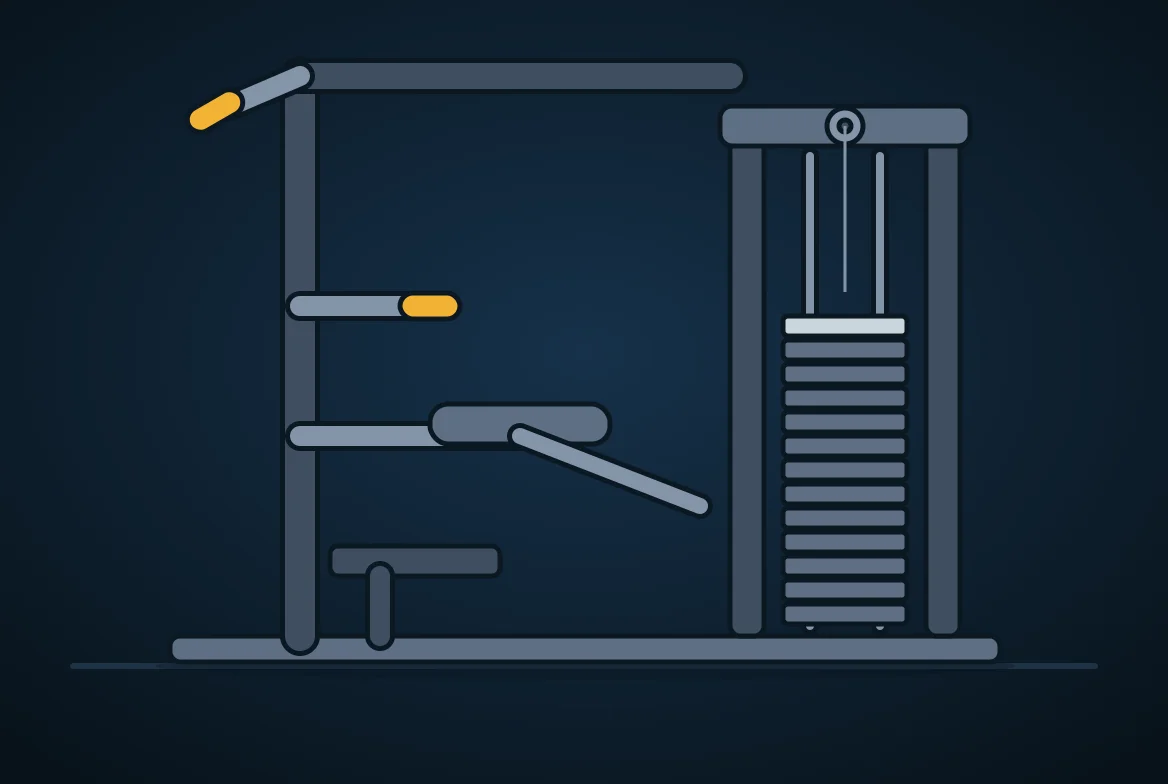
What it works
Your latissimus dorsi (luh-TISS-ih-mus DOR-sye) and biceps, the same as a real pull-up.
How to use it
- Choose the weight first, then climb on carefully.
- Knees or feet on the platform, hands on the top handles.
- Start from a full hang with straight arms, then pull your chest up towards the bar.
- Lower all the way down, under control.
Common mistakes
- Picking the heaviest weight because it's "more". It's the one machine that works backwards.
- Kicking and swinging.
- Stepping off mid-rep. The platform shoots up.
A safer swap
The lat pulldown does the same job, sitting down.
How to use it
- Choose the weight first, then climb on carefully.
- Knees or feet on the platform, hands on the top handles.
- Start from a full hang with straight arms, then pull your chest up towards the bar.
- Lower all the way down, under control.
Avoid
- Picking the heaviest weight because it's "more". It's the one machine that works backwards.
- Kicking and swinging.
- Stepping off mid-rep. The platform shoots up.
A safer swap
The lat pulldown does the same job, sitting down.
Did you know?
The only machine in the gym where lifting more makes it easier. Don't think about it too hard.
Worth knowing
- What a pull-up works: muscles worked.