STOP. WAIT. READ THIS FIRST.Tap to open
- Run your checklist before every lift. If anything feels wrong, rack it.
- Collars on every loaded bar, unless you're benching with no safety arms and no spotter. Then leave them off, so you can tip the plates off if you get stuck.
- On the bench, use a full grip with your thumbs round the bar.
- Heavy bench or squat? Set the safety arms, or get a spotter. Never neither.
- Small jumps. Add the smallest plates you can, not the biggest.
The full page: checklist, collars, grip, spotters and weight jumps
A short handle with a weight on each end, one in each hand. Your stronger side can't help out, so your weaker side has nowhere to hide.
The dumbbell lifts in Rep BookMoving demo, the pre-lift check, and a log that tells you when to go up.Open it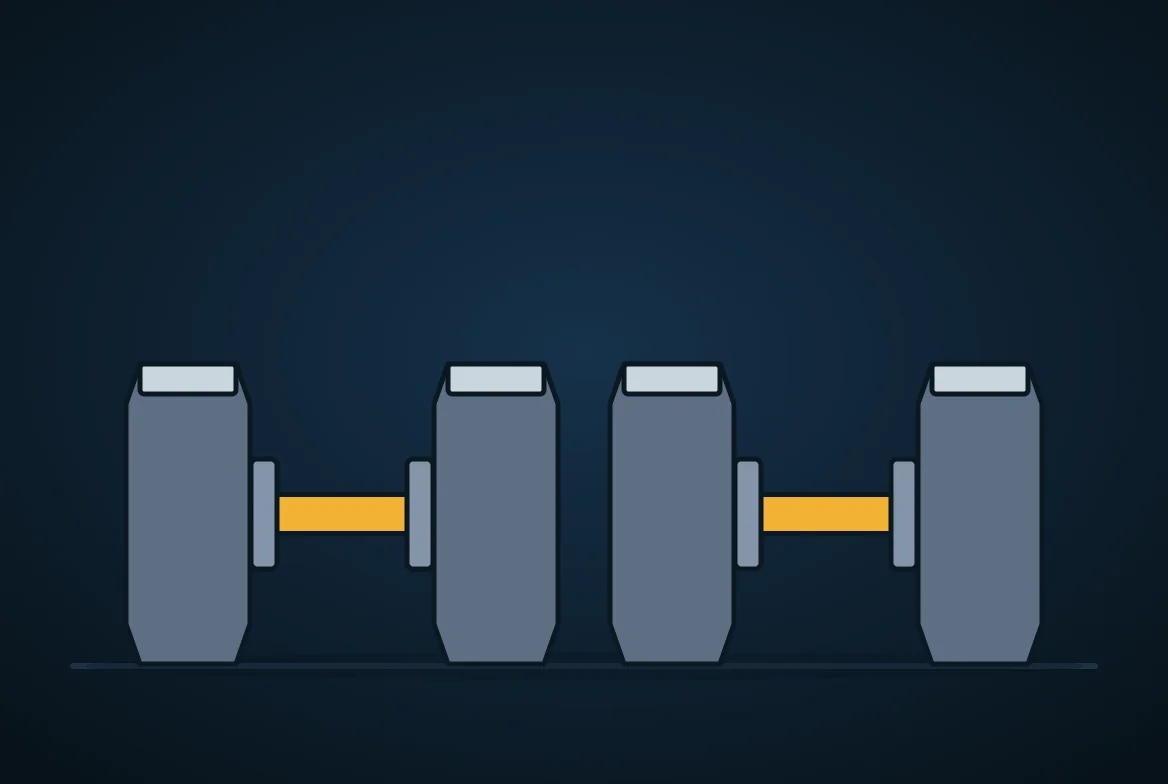
What it works
Almost anything. Presses, rows, curls, lunges, goblet squats. Because each arm works on its own, they're brilliant for finding and fixing a weaker side.
How to use it
- Start lighter than you think. Then a bit lighter than that.
- Do your weaker side first, and match those reps on your stronger side.
- On a bench, rest them on your knees, then rock back with them. Don't swing them up over your face.
- Put them back on the rack, in order, when you're done.
Common mistakes
- Swinging the curls. If your back's helping, your arms aren't.
- Dropping them from the top of a bench press. They bounce, and your toes are closer than you think.
- Leaving them on the floor. Someone will find them. With their foot.
A safer swap
Sit down with your back supported: a seated dumbbell press, or a chest-supported row. Less wobble, and far less load on your lower back.
How to use it
- Start lighter than you think. Then a bit lighter than that.
- Do your weaker side first, and match those reps on your stronger side.
- On a bench, rest them on your knees, then rock back with them. Don't swing them up over your face.
- Put them back on the rack, in order, when you're done.
Avoid
- Swinging the curls. If your back's helping, your arms aren't.
- Dropping them from the top of a bench press. They bounce, and your toes are closer than you think.
- Leaving them on the floor. Someone will find them. With their foot.
A safer swap
Sit down with your back supported: a seated dumbbell press, or a chest-supported row. Less wobble, and far less load on your lower back.
Where it came from
The dumbbell started out as a practice device for bell-ringers: a bell with no bell in it, so it was silent, or "dumb". The word was around by 1711, and only later came to mean a hand weight.1
Worth knowing
- Pressing heavy dumbbells on a bench? Read the bench press page and Read this first first.
- Why swinging wastes the rep: Lift it, don't launch it.
- Putting them back: Gym etiquette.
Sources
Every study and source this page leans on.
1. Online Etymology Dictionary. Dumbbell. Link.