STOP. WAIT. READ THIS FIRST.Tap to open
- Run your checklist before every lift. If anything feels wrong, rack it.
- Collars on every loaded bar, unless you're benching with no safety arms and no spotter. Then leave them off, so you can tip the plates off if you get stuck.
- On the bench, use a full grip with your thumbs round the bar.
- Heavy bench or squat? Set the safety arms, or get a spotter. Never neither.
- Small jumps. Add the smallest plates you can, not the biggest.
The full page: checklist, collars, grip, spotters and weight jumps
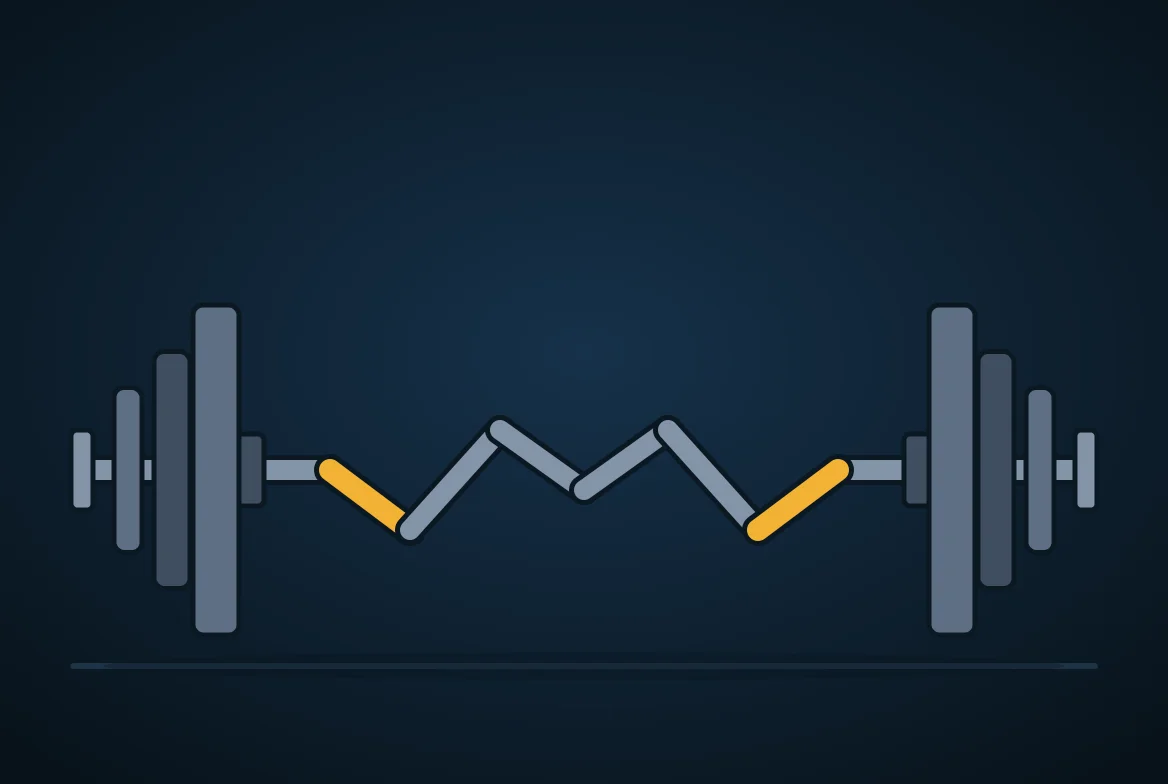
A short barbell with a wiggle in it. The bends let your wrists sit at a kinder angle for curls and triceps work.
What it works
Curls work your biceps. Lying triceps extensions work your triceps.
How to use it
- For curls, elbows by your sides. They stay there.
- No hip drive. Your legs aren't invited.
- Lower it all the way to straight arms, under control.
- Collars on, even with small plates.
Common mistakes
- Swinging it. That's the exact thing it was invented to stop.
- Elbows drifting forward to help.
A safer swap
Seated, preacher or cable curls take your back out of it.
How to use it
- For curls, elbows by your sides. They stay there.
- No hip drive. Your legs aren't invited.
- Lower it all the way to straight arms, under control.
- Collars on, even with small plates.
Avoid
- Swinging it. That's the exact thing it was invented to stop.
- Elbows drifting forward to help.
A safer swap
Seated, preacher or cable curls take your back out of it.
Where it came from
Lewis Dymeck patented it in 1950, so you could curl "without swinging the body". The patent calls the bends "tortuous". Accurate.1
Worth knowing
- Why swinging wastes the rep: Lift it, don't launch it.
- Feel the muscle working: Mind on the muscle.
Sources
Every study and source this page leans on.
1. Dymeck LG. Bar bell. US patent 2,508,567, published 23 May 1950. Link.