STOP. WAIT. READ THIS FIRST.Tap to open
- Run your checklist before every lift. If anything feels wrong, rack it.
- Collars on every loaded bar, unless you're benching with no safety arms and no spotter. Then leave them off, so you can tip the plates off if you get stuck.
- On the bench, use a full grip with your thumbs round the bar.
- Heavy bench or squat? Set the safety arms, or get a spotter. Never neither.
- Small jumps. Add the smallest plates you can, not the biggest.
The full page: checklist, collars, grip, spotters and weight jumps
Arms out wide, then bring them together in front of you like a hug. On many of them you can sit the other way round, and it works the back of your shoulders instead.
Try it in Rep BookMoving demo, the pre-lift check, and a log that tells you when to go up.Open it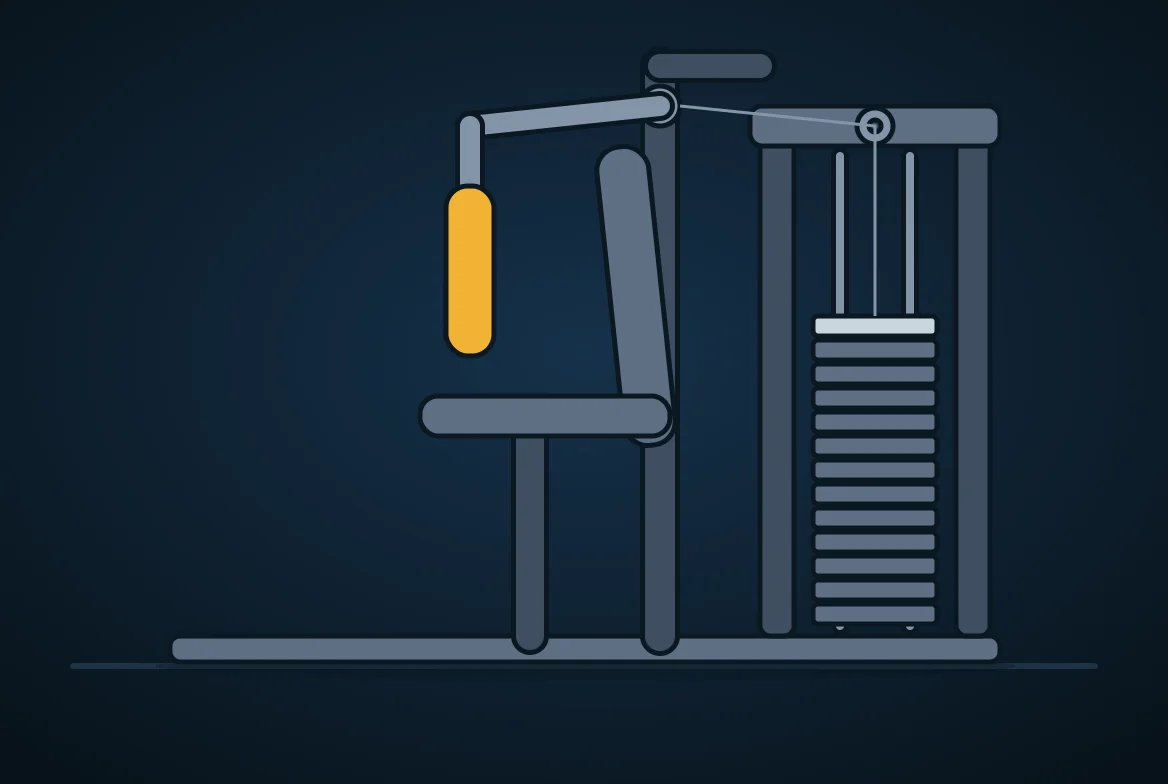
What it works
Your pectoralis major (pek-tuh-RAH-liss MAY-jer). The reverse version works your rear deltoids, at the back of your shoulders.
How to use it
- Set the seat so your upper arms are roughly level.
- Soft elbows. Keep that slight bend the whole way.
- Bring the handles together, squeeze, then let them back only as far as a comfortable stretch.
Common mistakes
- Letting the handles yank your shoulders back at the start.
- Swinging it.
A safer swap
Your back's supported, so it suits a bad back. If your shoulders are cranky, use a smaller range.
How to use it
- Set the seat so your upper arms are roughly level.
- Soft elbows. Keep that slight bend the whole way.
- Bring the handles together, squeeze, then let them back only as far as a comfortable stretch.
Avoid
- Letting the handles yank your shoulders back at the start.
- Swinging it.
A safer swap
Your back's supported, so it suits a bad back. If your shoulders are cranky, use a smaller range.
Worth knowing
- A good one for feeling the muscle work: Mind on the muscle.