The supplement aisle is where hope goes to spend money. Here's what's worth it, what isn't, and what's actually dangerous.
The lie
"It's the supplements that make the difference."
The short version
- You don't need supplements to start. Food, sleep and training first.
- Creatine is well researched and safe for healthy adults. Vitamin D in autumn and winter is NHS advice.
- Fat burners, and anything from a bloke in the changing room: no.
Today's rep: Before you buy anything, ask: are my sleep, food and training sorted? Jump to it
The tub is a rounding error
Nearly all the effect is the training. The tub is a logo.
Walk into any supplement shop and you'll be greeted by a wall of tubs the size of paint tins, every one of them black, every one with a lightning bolt on it, every one named like a heavy metal band from Doncaster. RIPPED. ANNIHILATE. SHREDDED NUCLEAR VENGEANCE XTREME, now in strawberry. A man with forearms like bags of satsumas will tell you what you need, and what you need, by remarkable coincidence, is everything on the shelf behind him.
Here's what he won't put on a poster. A beginner who walks, does home sessions, sleeps and eats a decent plate will make great progress without a single tub. Nearly all of the effect is the training. The tub is a rounding error with a logo.
Protein powder: food in a tub
Handy if you're short on protein. Pointless if you're not.
Protein powder isn't magic. It's food, dried out and put in a tub with a picture of a man who has never smiled. It's handy if you struggle to get enough protein from meals (chapter 14), and it mostly helps by adding to the total you eat across the day.1 If you already eat enough, you don't need it, however angry the man on the tub looks about that.
Creatine
Well researched, safe for healthy adults, and works for women too.
Creatine is one of the most researched supplements in sport. It helps with short bursts of hard effort, like lifting, and has a strong safety record in healthy adults. The usual amount studied is 3 to 5g a day.2 It isn't a steroid, whatever your nan read. Your body makes it, and it's found in meat and fish.2 And it isn't only for men with necks like a bollard. A review of the research in women found it helps strength and exercise performance, with no more side effects than a dummy pill.3
One thing people panic about: the first kilo or so you gain on creatine is mostly extra water stored in your muscles, not fat.2 Dr Shamington will notice, and he'll be thrilled. Ignore him. If you have a kidney problem or take regular medication, check with your GP first.
Vitamin D
The NHS says take 10 micrograms in autumn and winter. That's most of Britain's year.
The NHS advises everyone in the UK to consider taking 10 micrograms of vitamin D a day in autumn and winter. That's when there isn't enough sunlight for your skin to make it, which in this country means roughly September to whenever. Don't take more than 100 micrograms a day, as too much can be harmful.4
Folic acid, and "for her"
Folic acid before pregnancy. And the flower on the tub does nothing.
Trying for a baby, or pregnant? Folic acid is the one supplement the NHS actively asks you to take: 400 micrograms every day, from before you're pregnant until you're 12 weeks pregnant.5
You'll also see supplements sold specially "for women", usually in a softer colour, with a flower on. Put the label next to the ordinary version. If the ingredients match, buy the cheaper one. The flower does nothing.
Coffee
It genuinely helps performance. Keep it to the morning and early afternoon.
Good news. Caffeine genuinely helps exercise performance for most people.6 Up to 400mg a day is considered safe for most adults. That's roughly three or four mugs of coffee, depending how strong you make it.7 If you're pregnant, the NHS limit is 200mg a day.8
The catch is sleep. Caffeine hangs around in your system for hours, like a guest who says "right, I'll make a move" and then doesn't. In one study, caffeine taken six hours before bed still cut sleep by more than an hour.9 So keep it to the morning and early afternoon. A pre-workout drink at 7pm is a sleepless night with a gym membership. Lots of pre-workouts are very high in caffeine, so read the label, ideally before you've drunk it.
Fat burners
Mostly expensive caffeine. Some have killed people. Walk away.
Most "fat burner" pills are expensive caffeine with optimistic packaging. Some are far worse. A chemical called DNP has been sold online as a fat burner. It's an industrial chemical, and the Food Standards Agency has warned that it has killed people.10 If anything promises to melt fat, walk away. Fat isn't butter. Nothing melts it but time and work.
Supplements can also contain things that aren't on the label, including banned substances. If you compete in a tested sport, or just want peace of mind, look for products tested by a scheme like Informed Sport.11
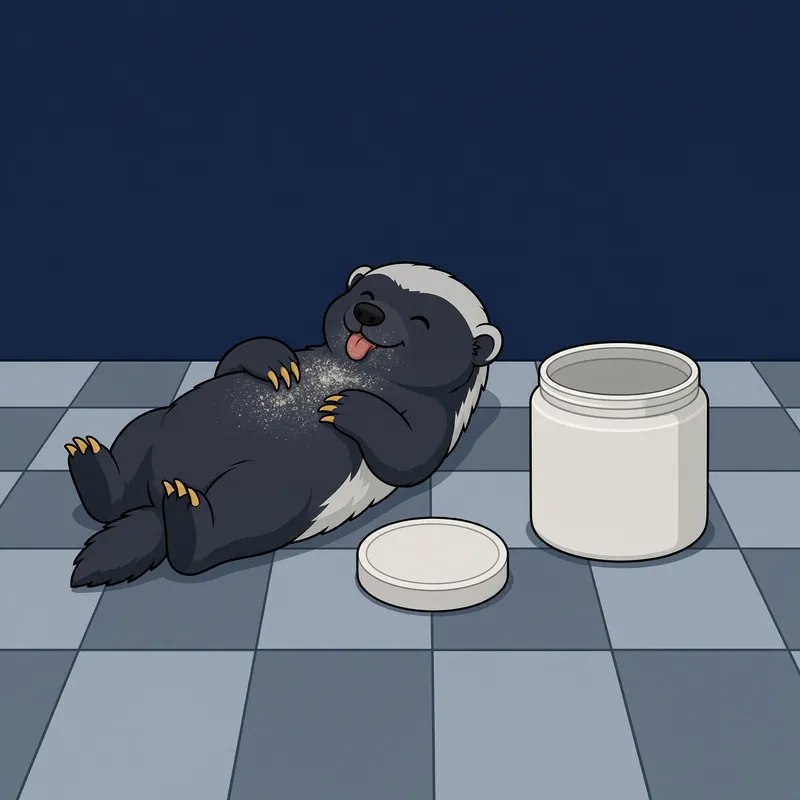
The bloke in the changing room
Whatever he's got near the hand dryer, you don't need it.
Every gym has one. He's very big, very friendly, very tanned for October, and he has a mate who can get you "something to help". He'll say it quietly, near the hand dryer, like he's selling you a watch. That something is often anabolic steroids.
Steroids have a long, strange history, and they get a whole page of their own: Steroids: the real story. The short version for a beginner: you don't need them, they carry serious health risks,12 and they won't do the boring work for you. Nothing will. Not even the stuff from the hand dryer.
Your rep for this chapter
Before you buy anything, ask: are my sleep, food and training sorted? If not, put the money towards decent shoes. Shoes have never once been called SHREDDED NUCLEAR VENGEANCE.
The lie: "It's the supplements that make the difference."
The short version
- You don't need supplements to start. Food, sleep and training first.
- Creatine is well researched and safe for healthy adults. Vitamin D in autumn and winter is NHS advice.
- Fat burners, and anything from a bloke in the changing room: no.
Your rep
Before you buy anything, ask: are my sleep, food and training sorted? If not, put the money towards decent shoes. Shoes have never once been called SHREDDED NUCLEAR VENGEANCE.
Your browser forgets. Your photos don't. Save it, and the rep turns up in your camera roll at 7am when you're looking for something else.
Sources
1. Morton RW, Murphy KT, McKellar SR, et al. A systematic review, meta-analysis and meta-regression of the effect of protein supplementation on resistance training-induced gains in muscle mass and strength in healthy adults. British Journal of Sports Medicine. 2018;52(6):376-384.
2. Kreider RB, Kalman DS, Antonio J, et al. International Society of Sports Nutrition position stand: safety and efficacy of creatine supplementation in exercise, sport, and medicine. Journal of the International Society of Sports Nutrition. 2017;14:18.
3. Smith-Ryan AE, Cabre HE, Eckerson JM, Candow DG. Creatine supplementation in women's health: a lifespan perspective. Nutrients. 2021;13(3):877.
4. NHS. Vitamin D.
5. NHS. Vitamins, supplements and nutrition in pregnancy.
6. Guest NS, VanDusseldorp TA, Nelson MT, et al. International Society of Sports Nutrition position stand: caffeine and exercise performance. Journal of the International Society of Sports Nutrition. 2021;18:1.
7. EFSA Panel on Dietetic Products, Nutrition and Allergies. Scientific opinion on the safety of caffeine. EFSA Journal. 2015;13(5):4102.
8. NHS. Foods to avoid in pregnancy (no more than 200mg of caffeine a day).
9. Drake C, Roehrs T, Shambroom J, Roth T. Caffeine effects on sleep taken 0, 3, or 6 hours before going to bed. Journal of Clinical Sleep Medicine. 2013;9(11):1195-1200.
10. NutraIngredients. Food Standards Agency warning on DNP. 29 August 2013.
11. Informed Sport: a batch-testing scheme that checks sports supplements for banned substances.
12. NHS. Anabolic steroid misuse.